 EN
EN

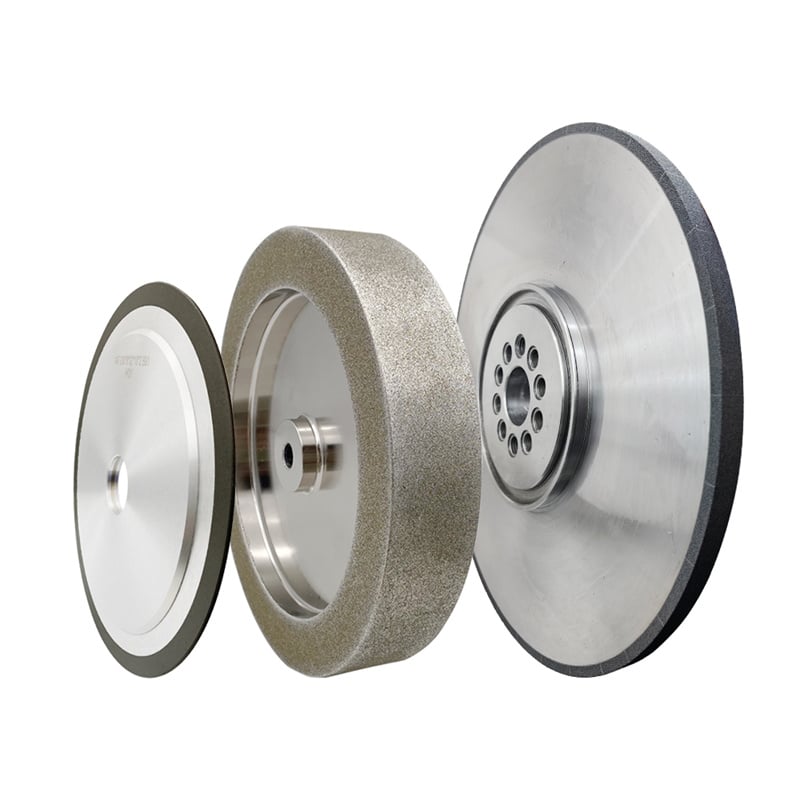
Diamond and CBN grinding wheels can be one of the largest investments in precision manufacturing. Diamond or CBN superabrasive grinding wheels are among the most costly tooling available, due to the inherent hardness and durability necessary to grind tough materials, and therefore can make or break the profitability of the machine shop operation. However, if properly maintained and stored, a CBN or diamond grinding wheel can provide years of valuable service while reducing costs and maintaining high levels of part quality.
Proper Storage: The Foundation of Wheel Life
The role storage plays in the longevity and efficiency of your diamond and CBN wheels should never be underestimated. When it comes to grinding wheels, both diamond and CBN are classified as “superabrasive,” meaning they have minuscule but extraordinarily hard particles of either diamond or CBN acting as the cutting surface, bonded to a metal or resin core. They’re significantly different from the more traditional “normal” abrasive wheel as a superabrasive wheel has the capacity to bend, twist, warp, become polluted with residue and to become damaged as a result of improper use and storage.
Temperature and Humidity Control: Store the wheels in a dry, dust-free area that has a steady ambient temperature and humidity. Temperature variations outside the optimum range can cause stress, leading to microscopic fractures within the bond material. Excess moisture may lead to the corrosion of the wheel core or breakdown of resins, as well. For optimal storage conditions, maintain temperatures between 18-24°C(65-75°F) with humidity under 60 percent.
Proper Racking: Place wheels on edge in a vertical position supported by a rack and balanced on an abrasive wheel edge, or a special support with sufficient diameter to rest directly underneath the central body of the wheel, not the grinding edge, with enough bearing area so that an even load can be placed on the edge. If they are to be laid down they must rest on their face, supported by a true flat surface to protect against warpage, never with any material piled upon the top surface.
Protection from Contaminants: Store your wheels covered or bagged up to stop dust, oil or other debris attaching themselves to the abrasive face. These contaminant particles get trapped on the wheel surface loading the wheel and wearing the wheel away prematurely. Keep resin bond wheels away from sunlight as ultra violet light degrades the bond.
Dressing and Truing: Restoring Wheel Performance
Diamond and CBN Wheels The use of diamond or CBN wheels makes for consistent and superior surface finish due to its ability to maintain a precise geometry, cutting sharpness, and dimension throughout its life. Over a course of grinding applications, the wheel will naturally wear, glaze and change its dimensions. Dressing the wheel to re-sharpen cutting points, to prevent glaze and to reclaim dimensions increases production and decreases grinding pressure.
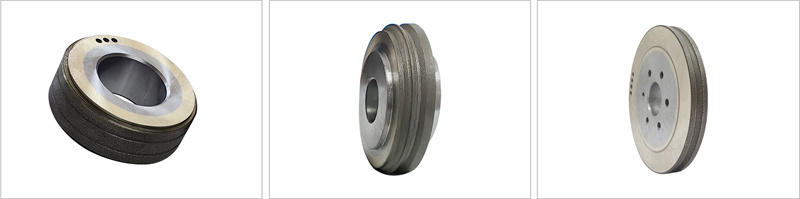
Frequency of Dressing: Dress wheel The wheel should be dressed whenever you notice that the wheel appears loaded, glazed or the cutting ability of the wheel is diminishing. The amount of dress must not be so much as to shorten wheel life; on the other hand, if the dressing is not sufficient, then grinding forces, heat, and possibility of work piece damage are greatly increased. Good habit: Dress wheel every grinding cycle or whenever the work is going slow.
Dressing Techniques: Make sure you’re using the proper tools to dress your superabrasive wheels. Because standard single-point diamond dressers wear quickly, and are more apt to damage the wheel. They’re just not up to the job. Instead use a rotating diamond dresser, a brake controlled truing machine or crushing rollers that were specifically made to be used on a CBN and diamond wheel. Use a CNC dressers for complex forms.
Truing for Runout: Out-of-true wheels result in chatter and uneven wear. The wheel's true and concentricity, or form error, is restored through truing. Truing is a process by which material is ground away from the periphery of the wheel. This process should be used conservatively to save the superabrasive layer. When plunged with a brake-controlled truing device, it is possible to both true and dress the wheel simultaneously.
Mounting and Handling Procedures
When a wheel is incorrectly mounted , the premature failure of the wheel is almost guaranteed. Imbalance, no matter how minimal, can also result in excessive vibration, poor surface finish and wear.
Balancing: Balance the wheel prior to installation. For high speed, dynamic balancing should be considered to prevent vibrations. Wheel imbalances cause cyclical loads, and can lead to separation of the wheel bond and reduce bearing life.
Mounting Torque: Tighten mounting flanges according to torque recommendations of the manufacturer. Over-tightening can cause the wheel to crack on the hub while under-tightening can lead to wheel slippage which generates heat and potential injury to the operator.
Clean Mounting Surfaces: Wipe mounting flanges and wheel bore clean. No burrs, dirt or foreign particles. Such as dirt is not a foreign body, the wheel will be slightly mounted in the form, causing vibration.
Coolant Maintenance and Performance
Coolant has many jobs including cooling the grind zone, sweeping chips, and providing lubrication for the grinding wheel/workpiece interface. Good coolants can help increase grinding wheel life.
Flow Rate and Pressure: See adequate flow and pressure so the coolant is directed to the grinding zone. If insufficient coolant is supplied there is a tendency to overheating, generating thermal cracks and damaging both the grinding wheel & the workpiece. For CBN, coolant is supplied to the grinding area where it will enter through the coolant entry nozzle where it needs enough flow & pressure to break the barrier of air that the grinding wheel generates.
Filtration and Cleanliness: Keep your coolant clean with filtration. Dirty coolant, full of abrasives, will cause the wheel to wear prematurely and produce defects. Regularly check your coolant levels and replenish per manufacturer instructions.
Concentration and pH: Always be on alert to coolant pH levels and concentrations. Any of those are incorrect and your parts or wheel core could start being destroyed, not to mention you lose your effective cooling.
Conclusion
These are some of the practices to improve diamond and CBN wheel life:storage, dressing and truing techniques, mounting methods and the way that the grinding wheel coolant system is managed. Following the best practices, a company can achieve many benefits: Lower tooling costs Higher quality part Produced schedule on time and efficiently REZZ provides specialized CBN wheel products designed for longevity and performance, tailor made to meet the specific needs of any operation. Contact us to learn about the performance and cost advantages you can experience by using our grinding wheel for your specific application.