 EN
EN

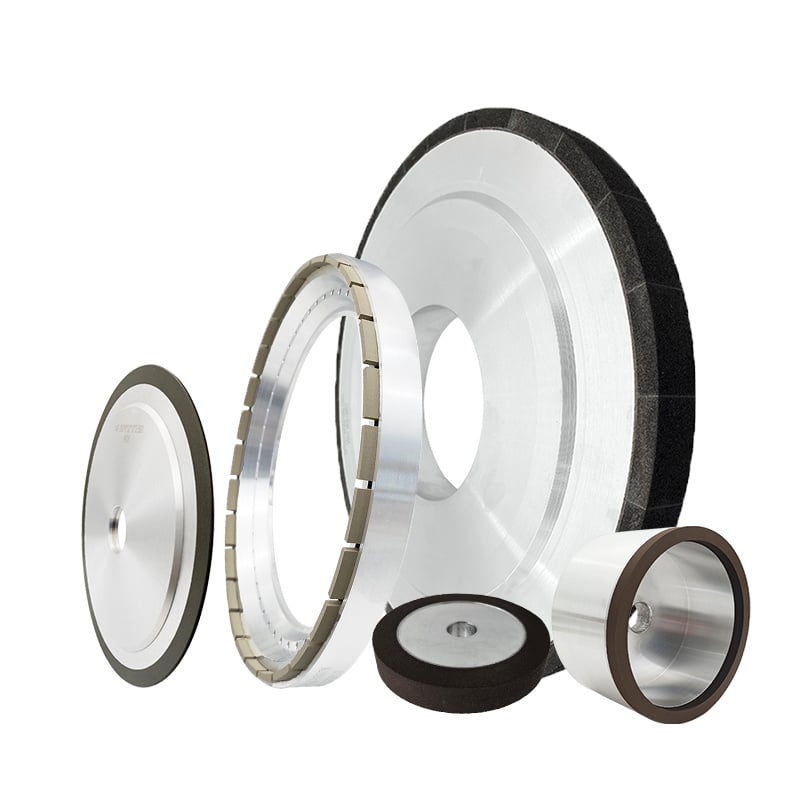
Burn is one of the most unattractive defects for precision workpieces grinding process. Thermal damage (black or black streaks/blue surface) is a harm to component part integrity and causes harm to valuable parts. When on CBN (cubic boron nitride) wheels, which not only are of superabrasive properties but also operate at high speed creating high temperature, the problem gets exacerbated. Luckily this is not the norm because by changing a few parameters for the rest of the gear it can be avoided all-together.
Why Workpiece Burn Happens
Thermal damage occurs when heat of the grinding zone is greater than that that can be handled by the system. Due to the very high grinding temperatures, the phase transition point of the workpiece material is exceeded, and the metallurgy on the surface of the workpiece is changed. It is evident in steel workpieces as surface of the workpiece is martensitic and sub-layer is overtempered, which implies that the part is less hard and has a shorter lifespan.
CBN wheels produce less specific grinding energy as compared with the conventional abrasive wheels and also the high thermal conductivity of the CBN actually withdraws heat from the workpiece. Burns can still occur, however, with the use of inappropriate processes. Not to mince words, it is a good one to know: typically, a package containing a targetted change/fix will resolve the problem.
Parameter 1: Wheel Speed
A common source of burning is burning defects that occur in the workpiece due to wheel speed. An overly fast spin makes the structure begin to wear away, and the heat and friction from the grains are excessive. It can become a serious problem if the electron-bombarded CBN wheel is a "vitrified-bond" type, for application with higher speed; the vibration generated by the high-speed operation may aggravate the problem.
How to Adjust: If burns are occurring, decrease wheel speed increment plus material removal rates. The critical removal rate for burn, of a CBN wheel, increases with conductive heat flow into the grains. There seems to be an opportunity to dissipate heat during the delay between the start of slowing down and its completion. If slowing down doesn't improve productivity then experiment with the next parameter.
Parameter 2: Feed Rate and Depth of Cut
The factors of feed rate and depth of cut are closely coupled and affect the grinding stresses acting upon the material, as well as the heat produced within the material. If cutting too deep or feeding too rapidly, wheel will not keep up with removing chips and cooling. Mechanically, on the other hand, if a depth of cut is too great, it can cause a problem: Burn may show up in the finished part after they have rough ground it and a too small finish grinding allowance remains to remove the burned layer.
How to Adjust: Gradually reduce the amount of material being fed and cut so that there is no burn. With a light depth of cut, the amount of heat load is lower in the grinding zone. In some applications, the feed rate may be reduced to the workpiece, while retaining the same depth of cut; this could then further optimise the cutting process and prevent overheating. Results from a previous study have shown that wheel speed and depth play a significant role on grinding force responses .
Parameter 3: Wheel Specification
If the wheel is not specified for its intended application it could be the problem with the CBN wheel itself. The bond type, wheel size and hardness, and particle size all have an impact on the wheel's ability to perform in a hot area. If it is too difficult or too fine a grit it wears slowly, but gives more heat. Low porosity will reduce the flow of coolant to grinding zone . In addition, the condition of the wheel should not be overlooked – if a poorly dressed wheel or wheel with material left on its surface clogs up the pores, it will not cut but will rub the surface to create friction and heat.
How to adjust: Try to use course grit or more porosity—should have more ability for the coolant to go through the material. With shallow grooves, helical grooves have been proved to greatly enhance coolant flow and reduce burn. Ensure wheel is dressed on a regular basis and ensure there is an appropriate dressing parameter. Some manufacturers have also seen success when using innovative materials such as CNT infused CBN wheels, with a reduction of any burning of material and also a significant increase in material removed.
When to Get Help
If, after changing to a different speed, feed, depth and wheel type and still you're getting burned, there may be an issue which isn't where you end up. Checking pressure and flow of the coolant supply, checking rigidity of the machine and checking of the clamping of the workpieces may induce thermal damage.
REZZ offers tailor-made grinding wheel products which can successfully avoid burn on various applications. Our wheels are being designed to the highest possible specification, suitable to your work piece, the grinding condition and to minimize heat generated and the grinding wheel's life. If grinding affects you then give us a call, we can get you to a solution that works for you.