 EN
EN

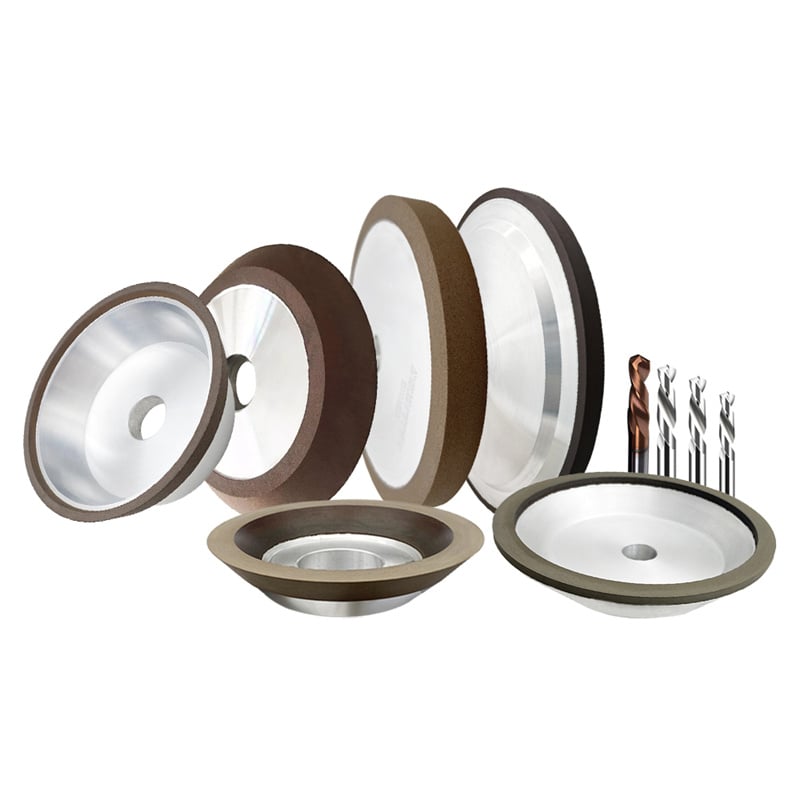
As one of the key cutting tool materials in modern production, carbide has the advantages of high hardness and good wear resistance. Nevertheless, due to carbide materials' characteristic features, such as high brittleness, low thermal conductivity, and high abrasive property, their effective grinding has become a significant issue in tooling industries. Diamond grinding wheels are the unique alternative choice for the purpose, as they can achieve excellent surface finish and tool shape. REZZ has been the professional manufacturer of grinding wheel since 2014, delivering tailored diamond wheel solutions for carbide tools production.
Why Diamond Is Essential for Carbide Grinding
Often containing carbide particles held together by cobalt, carbide (as it is informally known), is one of the most resistant material to scratching found in manufacturing. Its high level of hardness-usually in the range of 86-93 HRA, means that carbide is very wear-resistant, but incredibly challenging to cut or machine. Standard grinding wheels will not cut into a piece of carbide – a diamond wheel is required.
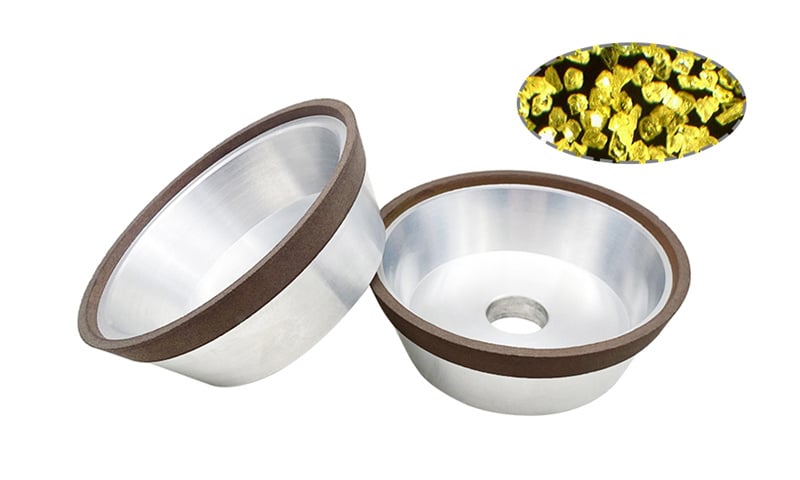
Other abrasives will rapidly lose their edge as they wear, whereas diamond wheels do not have this problem. A grinding ratio (amount of workpiece material removed divided by amount of wheel worn away) for diamond wheels in carbide application is far superior to that of any other grinding material. High thermal conductivity, associated with diamond, conducts heat away from the grinding point, thus eliminating excessive heating of the carbide.
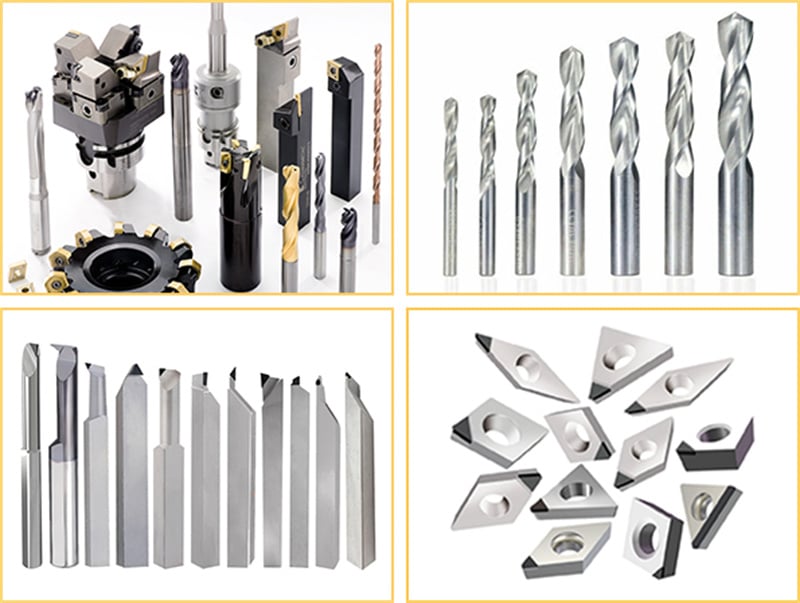
Wheel Selection: Resin vs. Metal vs. Vitrified Bonds
Select the appropriate bonding system. A particular grinding operation is suited to a different bond for optimum performance.
Resin bond wheels used for the most of time in carbide grinding, the bond is loose, and it can easily get self sharpening property to some extent, it is better for the parts which need no grinding repeatedly, resin bond diamond wheels has lower heat resistant ability than metal bond diamond wheel. Also they do not work with some special grinding fluid well.
Metal bond wheels are commonly used in production carbide grinding where longevity is paramount. Metal bond wheels tend to be less self-sharpening and require more frequent dressing.
Vitrified bond wheels are designed to provide more strength than that found in metal bonds with a higher porosity like that of a resin bond wheel so the wheel can more effectively delivery coolant. These wheels are the optimal wheel when grinding complicated geometries found in carbide tools where form is important. They contain 50 percent abrasive to offer greater wheel life than that of a resin wheel.
Dressing and Maintenance for Optimal Performance
Carbide tool grinding requires specific care in the form of proper dressing when grinding with diamond wheels. Special attention in wheel dressing should be given to provide proper sharpness to the abrasive on the wheel and proper profile to the wheel while at the same time being as economical as possible regarding costly diamond.
Rotary diamond dressers consisting of a diamond-impregnated roller that rubs against the wheel to expose the sharp points and true the wheel shape, are the most frequent dressing method for diamond wheels used to grind carbide. The use of brake-controlled truing devices permits truing and dressing to be performed simultaneously, minimizing process steps. The optimal rate of dressing varies for each application and wheel size, however excessive dressing shortens the life of the diamond wheel, while insufficient dressing results in increased grinding pressures and tool damage. The amount of truing/dressing should be determined by a well-established dressing schedule for each class of wheel. Record keeping of the dressing schedule for each wheel is advised.
Grinding Parameters for Edge Quality and Tool Life
In carbide grinding, the edge quality and tool life is affected greatly by grinding parameters. The correct choice of parameters can avoid the occurrence of chipping and thermal damage, and prolong the life of the tool.
Wheel speed can also be associated with poor tool life. Very low spindle speeds generally require more tool force, or alternatively reduce material removal rates. While too fast a speed will contribute to the overheating of carbide cutting surfaces and lead to thermal damage, very low spindle speeds will minimize material removal. Today, most modern carbide tool grinding machines run high speeds in order to remove the largest amounts of material possible, while minimizing excessive heat at the grinding edge.
Feed rate and depth of cut are crucial parameter. Deep cuts can cause chipping and thermal damage especially when using low-cobalt content carbide grades. Experiments reported ultrasonic vibration assistance enhanced grinding of edges. Grinding forces and thermal damage were reduced with the assistance of ultrasonic vibration.
Coolant delivery is a high-pressure, properly directed coolant stream keeps the grinding zone cool and carbide particles clear of the wheel for efficient cutting. For CBN wheels, a coolant nozzle is designed to direct coolant into the grinding zone in a manner that will get the coolant through the air shield around the wheel when it's spinning at high RPMs.
Conclusion
The need for effective and economical grinding wheels is particularly apparent in carbide tool manufacturing. With sharp cutting tools required to ensure long tool life, designers of carbide inserts turn to diamond wheels as a superior abrasive alternative. It is vital to utilize the correct bond type, apply effective wheel preparation (dressing and sharpening) and set suitable grinding conditions in order to maintain optimal quality and maximize wheel lifespan.
REZZ has a comprehensive range of specialized Diamond Grinding Wheels available for the Carbide Tool Industry. Please Contact Us to find out more about our grinding solutions.