 EN
EN

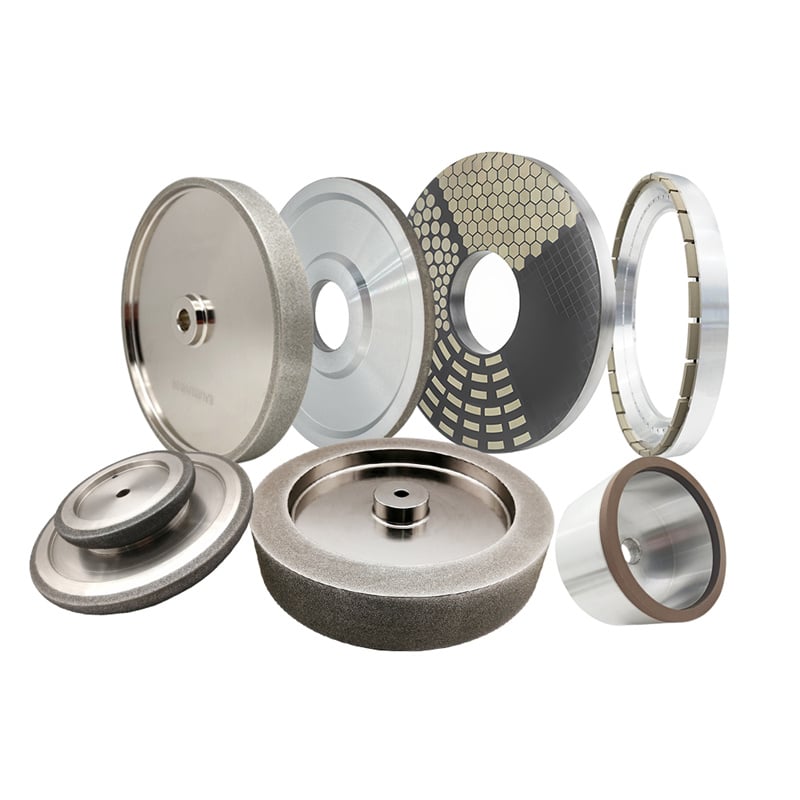
As medical, aerospace, electronics, and automotive fuel system components get smaller and more intricate, the need for micro-machining at sub-micron levels increases. Applications such as grinding small slots, fine blanking punches, and micro drills require a grinding wheel that removes material at increments measured in microns, and even sub-microns. Conventional grinding wheels, with larger grit sizes, simply cannot produce a quality finish without edge chipping, excessive burrs or thermal damage. It's ultra-fine grit diamond and CBN wheels that make sub-micron precision micro-machining a reality. Zhengzhou Ruizuan Diamond Tool Co., Ltd. produces custom ultra-fine grit wheels that provide the precision and surface finishes demanded by the micro-machining industry.
Understanding Ultra-Fine Grit Sizes
Grinding wheels are manufactured using grit sizes from coarse D46 or B46 (about 300 to 400 microns) to fine D126 or B126 (about 100 to 125 microns). Ultra-fine grit wheels take this significantly further, as is the case with ultra-fine grit wheels manufactured by Ruizuan. Ruizuan produces D3 or B3 diamonds or CBN grit sizes where the average abrasive grain size is merely three microns, or about 1/30th the diameter of a human hair.
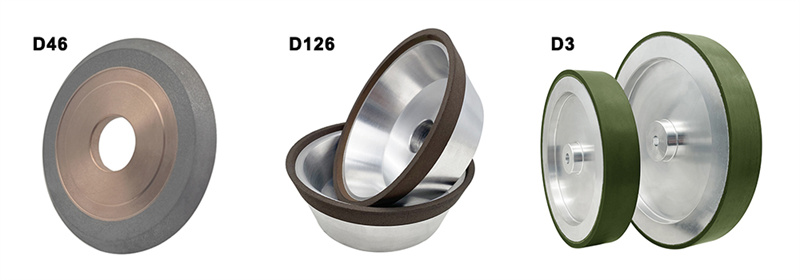
At this level of ultrafine grit size, each abrasive grain is removing an infinitesimal amount of material in every cutting pass. The surface finish produced can be measured in nanometers instead of microns. Just as importantly, grinding forces are incredibly low, minimizing deflection of very delicate workpieces and allowing precise machine positioning. When it comes to micro-machining of micro-grooves in fluidic devices, finishing bearing races in miniature components, and countless other applications, the ultra-fine grit wheel isn't just an option -- it's essential.
Achieving Sub-Micron Dimensional Tolerances
Micro-machined components frequently have dimensional tolerances that are in the plus or minus one micron range, or even tighter. When using a larger grit wheel, obtaining such tight tolerances is nearly impossible because each abrasive grain has a relatively large chip, and control over material removal is poor.
With ultra-fine grit wheels, the grinding machine can incrementally remove materials in increments measured in tenths of a micron per pass. This gives an exceptional level of control in the ability of the manufacturer to creep up to final dimensions without the chance of going past the tolerance band. Equally important, with even chip formation of ultra-fine grit wheels, grinding force is consistent and doesn't cause the deflection that would produce dimensional error. Customers using ultra - fine grit wheels have achieved tolerances of ±0.0005 mm on hardened micro - components.
Surface Finish and Edge Quality
For micro-machined parts, edge quality and surface finish are as important as dimensional accuracy.Rough surface finishes can create stress risers that could propagate fatigue cracks in medical implants and cause premature wear in micro-mechanical devices. Burrs on micro-edges can prevent proper fitting during assembly or create issues in the free flow of micro-channels or fluidic systems.
With ultra-fine grit wheels, mirror-like surface finishes can be achieved without secondary polishing operations. The minuscule and extremely sharp abrasive grains don't plow the workpiece material, and there is very little underlying plastic deformation. They essentially "cut" the workpiece without burr formation. For applications such as finishing micro dies for extrusion or micro-punches used in stenting, using ultra-fine grit wheels from Ruizuan has reduced post-grinding deburring time by more than 80 percent while improving the edge quality.
Application-Specific Wheel Design for Micro-Machining
Designing ultra-fine grit wheels for the specific demands of the application are critical. Bond type should be selected depending on the workpiece material and on the grinding machine's specifications. Resin bonds are commonly preferred because they offer a softer, cooler cut and help release dulled microscopic grains. Metal bonds can also be utilized and provide superior form holding. Grit concentration must be chosen to provide a sufficient number of cutting points but to avoid generating an excessive amount of heat.
Ruizuan works closely with clients to design ultra-fine grit wheels to meet the needs of a specific micro-machining application. Among the considerations are workpiece material hardness, target surface finish, the rate of material removal, and machine speed along with the coolant system available. In one specific application for grinding micro-slots in hardened stainless steel medical devices, Ruizuan developed a D3 resin-bonded diamond wheel that boosted cycle time by 40 percent and the slot finish went from rough to polished. The wheel also lasted 3x longer than the product from their previous supplier.
Summary
Ultra-fine grit diamond and CBN wheels have opened the door to sub-micron precision micro-machining. These wheels utilize abrasive grain sizes as small as three microns to achieve dimensional tolerances of one micron or better, mirror-like surface finishes, and burr-free edges. Zhengzhou Ruizuan Diamond Tool Co., Ltd. provides custom ultra-fine grit wheels for micro-machining applications in the medical, aerospace, electronics and automotive sectors. Since 2014, Ruizuan has combined an emphasis on abrasives technology with stringent quality control measures, backed by certifications including CE, SGS, TUV and ISO9001. Contact Ruizuan today to discuss your precision micro-machining requirements.