 EN
EN

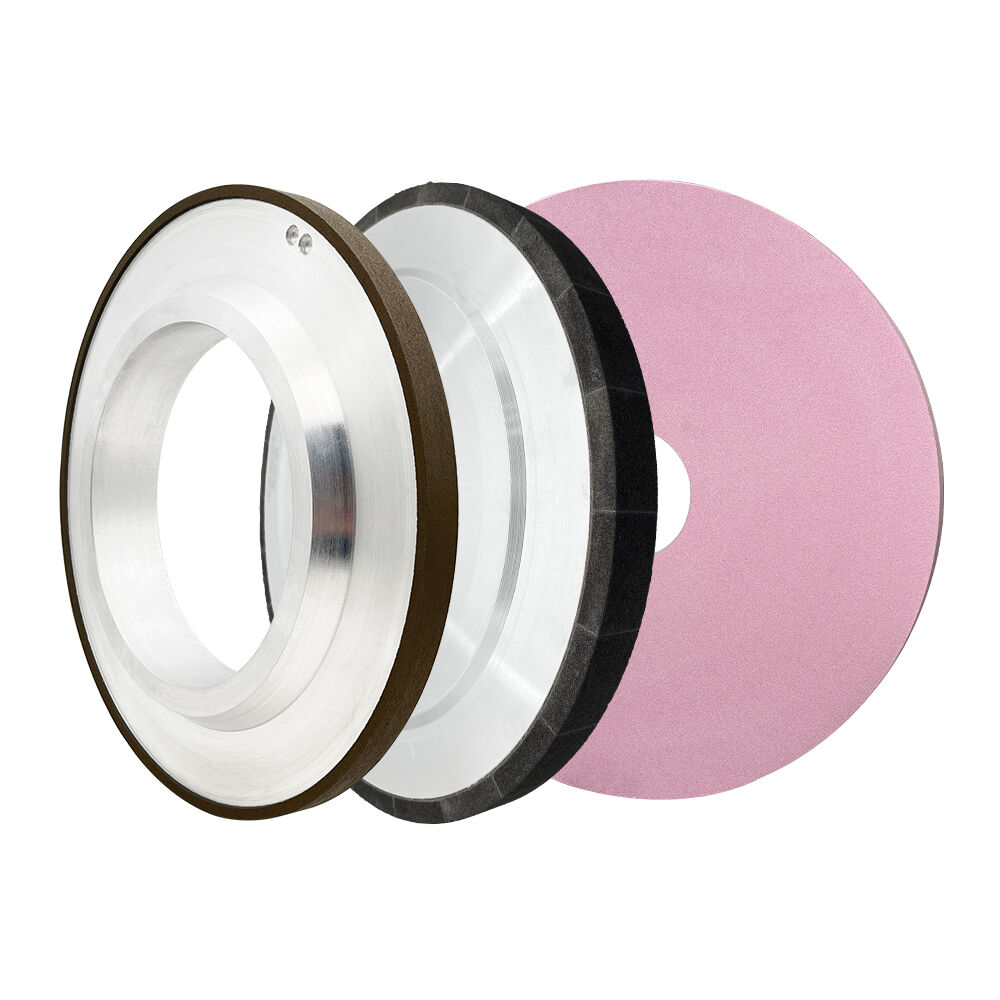
In the modern competitive world of manufacturing and precision grinding, all the decisions made during operations should be explained by a definite return on investment (ROI). The selection of the correct abrasive tool in the job is one of the most influential decisions made. Although the conventional abrasive wheels have served as a default over the decades, newer options of superabrasive such as diamond and Cubic Boron Nitride (CBN) wheels are redefining cost-effectiveness. In the case of a specialized manufacturer such as Zhengzhou Ruizuan Diamond Tool Co., Ltd., it would be essential to understand and communicate such ROI. In this blog, the authors deconstruct the actual financial and operational calculus of premium superabrasive wheel selection.
The Hidden Costs of Traditional Abrasive Wheels
Traditional aluminum oxide or silicon carbide wheels have an initial purchase cost lower at first sight. This initial savings of cost is what makes them continue to be used. Nonetheless, a more in-depth examination shows that there is a lot of cost in the background that destroys profitability. These wheels are worn away very fast during operation and therefore have to be replaced too often. Not only does this add to direct material costs in the long run but also causes the machine to undergo a lot of machine downtime due to changing of wheels and dressing. Every downturn in production stops production, which influences total capacity. Moreover, the uneven rate of wear may cause some variation in the quality of finishes and the dimensions of parts, which may raise scrap rates. The overall outcome is a cycle of reoccurring costs, inconsistent productivity, and impaired consistency.
First Investment in Diamond and CBN Wheels
Diamond and CBN wheels are designed to be extremely hard and durable and thus cost more initially than traditional abrasives. This is the price that is associated with the high level of technology and materials with which they were manufactured by experts such as Zhengzhou Ruizuan Diamond Tool Co., Ltd. It is necessary to think of this not only as a cost, but a capital investment in your grinding process. Their outstanding longevity and long life performance is the key value proposition. Making the financial perspective change in the sense of a repeated consumable expenditure into a long-term asset investment makes the argument behind the upgrading more evident. The actual analysis starts at this initial expenditure being counterbalanced to the actual savings that are achieved over the long life of this wheel.
Bringing Performance Advantages To Life To Lead to Savings
The ROI of the diamond and CBN wheels is achieved due to their excellent performance attributes. Their hardness is so extreme that it means very low rates of wear. Only one CBN wheel or diamond can last dozens or in some cases hundreds of conventional wheels. This has the massive effect of minimizing the number of wheel replacements per year and reduces inventory requirements and purchasing overhead. More critically, they are capable of maintaining shape and cutting capability longer durations and therefore can be grounded consistently and with high precision and quality surface finish with tight tolerances. This uniformity reduces scrap and rework. Also, numerous formulations can support increased feed rates or cutting speeds and do not burn the workpiece, directly increasing throughput and productivity. These wheels make the process of grinding a variable and a high maintenance one, consistent and predictable.
Calculating the Total Return on Investment
The ROI calculation should not be done by examining the price but by putting into consideration the overall cost of operations. Take a close comparison involving; the direct expenses of wheel purchases in one year, the indirect expenses of machine downtimes to make changes and to dress the machine, the labor expenses of the machine interruption, and the cost of quality rejects. When you add up these in the case of traditional abrasives, annual spending is usually shocking. By contrast, in the case of a diamond or CBN wheel, the calculation involves the greater initial cost, but then of insignificantly lower replacement costs, greatly reduced downtimes, less labor required to do changeovers, and yield because the quality is uniform. The overall effect is a cost-per-part-ground that is usually much lower. The break-even period of the initial investment can be short than anticipated, then a long duration of net savings and increased production ability.
Strategic Choice: Making the Strategic Choice to Your Operation
The decision between the use of traditional or superabrasive wheels will always be made depending on your materials, tolerance and volume. In hard, brittle or abrasive such as tungsten carbide, ceramics or hardened steels, the case is too good to resist diamond and CBN wheels. The strategic change is that instead of focusing on short-term savings, the emphasis will be laid on total cost of ownership and production stability. When you collaborate with such a successful manufacturer as Zhengzhou Ruizuan Diamond Tool Co., Ltd., you are guaranteed to get the most suitable wheel specification in your specific application that will give you the highest ROI. When you invest in the more sophisticated technology of abrasives you are not only purchasing a valuable tool but also a higher level of efficiency, dependability and the long time competitiveness in your whole abrasive grinding process.