 EN
EN

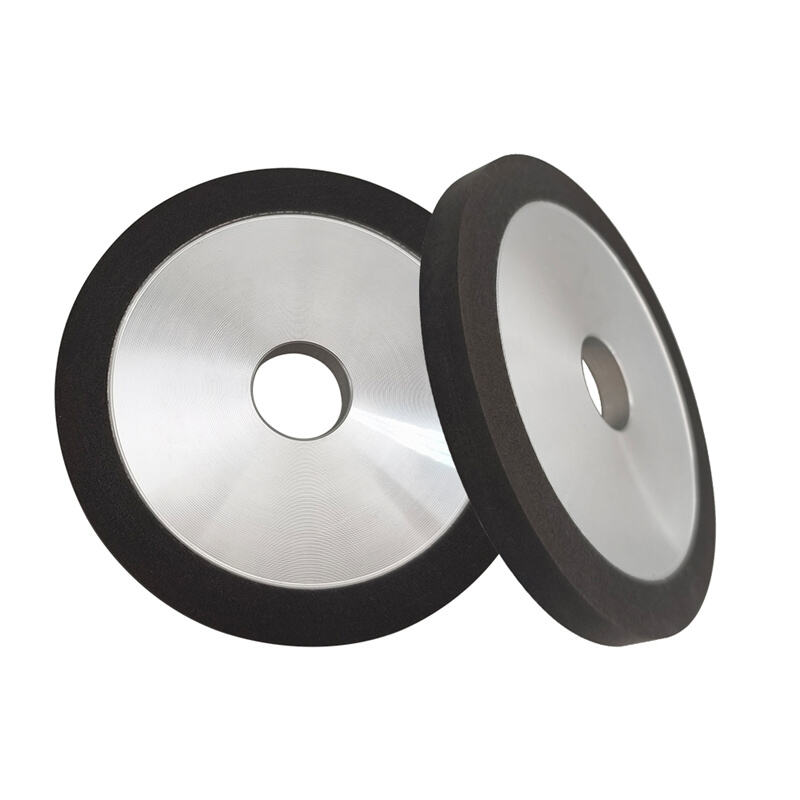
Aerospace turbine blades are subjected to immense pressures-high temperatures, massive centrifugal forces and corrosive combustion gases. Any minuscule surface flaws can turn into cracks and lead to catastrophic failure. This makes it critical for turbine blade manufacturers to achieve outstanding surface integrity, very precise dimensional tolerances, and stable material removal rates during grinding and polishing operations. Conventional Aluminum Oxide (Al₂O₃) and Silicon Carbide (SiC) wheels do not perform as effectively on the high-strength superalloys like Inconel, Waspaloy, Ren alloys that are commonly used for turbine blades. Diamond CBN (cubic boron nitride) wheels, manufactured by Zhengzhou Ruizuan Diamond Tool Co., Ltd. have now become the optimum choice for the fine polishing of Aerospace turbine blades.
Superalloy Grinding: Why Conventional Wheels Fail
The most common nickel based superalloys used for turbine blades are designed to be highly resilient to heat and wear, however this also makes them difficult to machine. Limitations for conventional abrasive wheels include:
A grain dulls rapidly at this hardness level, resulting in higher forces exerted on the part.
Significant amount of heat being generated causes burns, re-hardening and micro-cracking.
Frequent wheel dressing is required, thus reduces productive grinding time.
Inconsistent material removal leads to inaccuracies of the blade profile.
These disadvantages are not acceptable when performing work on aerospace turbine blades. This application places a premium on the ability to achieve and maintain surface integrity which directly correlates with component lifespan and aircraft safety.
How Diamond CBN Wheels Solve the Superalloy Challenge
Cubic boron nitride is the second hardest material known behind diamond. However unlike diamond, it is chemically inert when applied to both nickel and iron based superalloys, thereby it becomes the optimum choice when grinding this group of superalloys. Ruizuan’s Diamond CBN wheels provide:
Extreme hardness: which remains intact even when machining hardened superalloys of up to 65 HRC.
Thermal stability: CBN retains its cutting edge at temperatures where diamond would graphitize.
Chemical inertness: No reaction takes place which would contribute to the loading and adherence of chips onto the wheel surface.
Ruizuan generally specifies resin bonded CBN wheels in very fine sizes of grit (B91-B151) for polishing of turbine blades. The resin binder allows for a “softer” cutting action to be achieved and produces a better quality surface finish while preventing sub-surface damage.
3. Precision Profile Grinding for Airfoil Surfaces
The three-dimensional contour of a turbine blade airfoil shape becomes progressively more complex from root to tip. When grinding the airfoil, the wheel profile must be highly precise and follow the contours without ever wavering from the design specification. Deviation from the specification compromises both aerodynamic performance and fuel efficiency.
Custom profile CBN wheels are manufactured by Ruizuan using state-of-the-art CNC dressing technologies. Each wheel is precisely formed to the exact airfoil dimensions for continuous contact on the entire blade surface. The advantages include:
Profile accuracy: Airfoil tolerance as tight as 0.01 mm.
Uniform stock removal: Smooth stock removal, prevents localized thin spots or building up of material.
Reduced hand finishing: significantly reduces time spent finishing the surface by hand.
A switch to custom profile CBN wheels resulted in a 60% time savings and elimination of surface burns for one of Ruizuan's aerospace customers.
Surface Integrity and Fatigue Life Improvement
Surface integrity is the priority over actual production rate. The presence of residual tensile stresses, micro cracks and white layers that can develop in grinding operations drastically reduce a part’s fatigue life. When a CBN wheel grinds the superalloy, a beneficial residual compression stress is applied to the ground surface thereby inhibiting crack initiation.
Ruizuan’s finishing operation involves:
Optimized wheel speed: optimal wheel speed between 20-30 m/s to avoid burn and subsequent micro cracking.
Coolant delivery: coolant directed at the wheel at high pressure to flush away chips and minimize the rise in temperature.
Multi - pass strategy: A two stage grinding process (coarse and fine grain CBN wheels) from B107-B64.
A comparison performed on a metallurgical level showed turbine blades ground with Ruizuan CBN wheels exhibited no signs of thermal stress or micro cracks, and a 35% improvement in fatigue life compared to conventional grinding wheels.
Summary
The demands placed on grinding and polishing of aerospace turbine blades are some of the most rigorous to be found within any manufacturing sector today. With extremely precise tolerance requirements, demanding surface finishes, and stringent requirements to improve part fatigue life, the superiority of the Ruizuan Diamond CBN wheels has been proven over conventional wheels. Since 2014 Ruizuan has been a valuable partner within the aerospace sector with certification ISO 9001, TUV, SGS, CE etc.. Contact Ruizuan today for both OEM & ODM grinding and polishing solutions of turbine blades or other complex aerospace components.